
Which Salt Chlorine Generator Brands Offer the Best Value for Homeowners in Keller, TX?

If you are converting a traditional chlorine pool to a saltwater system in Keller, Texas, four brands are worth comparing: Hayward, CircuPool, Pentair, and Jandy. Each offers options for different pool sizes, equipment setups, and budgets. The best choice is not necessarily the cheapest unit; it is the system that delivers reliable chlorine production, fits your existing equipment, and offers reasonable long-term maintenance and replacement costs.
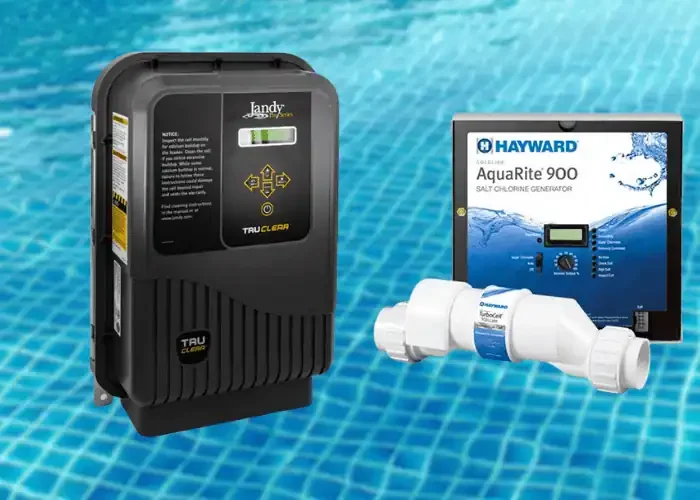
For many homeowners, Hayward AquaRite is a strong all-around option. CircuPool RJ-PLUS deserves consideration if upfront and replacement-cell costs are priorities. Pentair IntelliChlor makes sense for pools already using compatible Pentair equipment, while Jandy TruClear is worth evaluating for Jandy-equipped pools.
Before choosing a model, consider your pool's actual water volume, daily chlorine demand, existing automation, warranty terms, and the cost of replacing the salt cell.
Quick Comparison: Best-Value Salt Chlorine Generators
When choosing a saltwater chlorine generator, the right fit depends on your existing equipment, pool size, and budget. The Hayward AquaRite suits homeowners seeking an established, widely used system. It's available in different capacities, so be sure to check the correct TurboCell and control configuration for your setup. For buyers comparing equipment and replacement-cell costs, the CircuPool RJ-PLUS is worth a close look—the RJ-45 PLUS is rated for pools up to 45,000 gallons, subject to operating conditions. The Pentair IntelliChlor Plus is best for pools with compatible Pentair equipment and automation, though you should compare cell capacity, integration, warranty, and replacement costs before deciding. Finally, the Jandy TruClear appeals to homeowners who prefer Jandy equipment; the standard TruClear is rated for pools up to 35,000 gallons, while the TruClear XL is a separate option for larger pools.
These are practical starting points, not a universal ranking. Manufacturer capacity ratings are maximums, and the right choice depends on your pool's chlorine demand and how the system will operate during the Texas swimming season.
1. Hayward AquaRite: A Strong All-Around Choice
Hayward AquaRite is worth considering if you want an established salt chlorination platform with different cell capacities and a broad equipment ecosystem.
The AquaRite T-CELL-15 configuration is rated for pools up to 40,000 gallons. That rating can make it a candidate for many residential pools, although the appropriate size depends on more than the pool's volume alone.
Why consider Hayward?
Several cell sizes are available for different pool requirements.
The AquaRite family has established troubleshooting and maintenance documentation.
It may be a practical fit for pools already equipped with compatible Hayward equipment.
Replacement-cell availability and the cost of parts should be checked before purchasing.
Potential drawback: The total cost can increase when you include installation, electrical work, plumbing changes, and a future replacement cell. Confirm the exact system model and cell configuration rather than comparing prices for products that are not equivalent.
Best for: Homeowners looking for a familiar system and a balanced approach to equipment cost, serviceability, and long-term ownership.
Manufacturer reference: Hayward AquaRite troubleshooting guide.
2. CircuPool RJ-PLUS: Worth Comparing for Long-Term Value
CircuPool is a serious option for homeowners who want to compare the purchase price and ongoing cost of owning a salt chlorine generator.
The CircuPool RJ-45 PLUS is rated for pools up to 45,000 gallons and has a manufacturer-listed chlorine production rate of 1.9 pounds per day. CircuPool lists a seven-year limited warranty for this model, subject to the applicable warranty terms.
Another consideration is replacement-cell cost. A system's long-term value depends partly on what it costs to maintain and replace its main components after years of use.
Why consider CircuPool?
The RJ-PLUS range includes higher-capacity options.
Replacement-cell pricing can be compared directly with competing systems.
The published warranty may be attractive to buyers who are comparing long-term ownership costs.
The manufacturer provides product support, replacement parts, and technical documentation.
Potential drawback: Check the system's compatibility with your existing automation and equipment before buying. A lower equipment price does not automatically mean a lower installed cost, and warranty coverage should be reviewed in full.
Best for: Homeowners who prioritize value and are willing to compare a broader range of manufacturers rather than choosing solely by brand familiarity.
Manufacturer reference: CircuPool RJ-45 PLUS specifications.
3. Pentair IntelliChlor Plus: A Logical Option for Compatible Pentair Equipment
If your pool already uses Pentair equipment, IntelliChlor Plus deserves a close look. Keeping equipment within a compatible ecosystem may simplify controls and day-to-day operation, especially when a pool has integrated automation.
Pentair lists the IntelliChlor Plus40 for pools up to 40,000 gallons, with chlorine production of 1.4 pounds per 24 hours at 100% output. Pentair also offers other capacities, so the Plus40 should not be treated as the default for every pool.
Why consider Pentair?
It may integrate more conveniently with compatible Pentair automation.
Different capacities allow a system to be selected according to pool demand.
Manufacturer documentation provides specifications and operating guidance.
Existing equipment compatibility can help inform the overall conversion plan.
Potential drawback: Do not assume that choosing the same brand guarantees compatibility with every older controller or pump. Confirm the specific equipment models and compare warranty coverage and replacement-cell costs.
Best for: Homeowners with compatible Pentair equipment who want to evaluate a salt system within their existing setup.
Manufacturer reference: Pentair IntelliChlor Plus and LT systems.
4. Jandy TruClear: A Good Candidate for Jandy Equipment Setups
Jandy TruClear is designed for straightforward salt chlorination and can be a practical choice for compatible equipment configurations. Its compact design and removable cell make routine inspection and maintenance more accessible.
The standard TruClear is rated for pools up to 35,000 gallons. Jandy also offers the TruClear XL, which is designed for larger pools, with a published capacity of up to 45,000 gallons.
Why consider Jandy?
The compact system can suit equipment pads where space matters.
The transparent cell housing helps with visual inspection.
TruClear can work with compatible Jandy AquaLink automation.
The TruClear and TruClear XL offer different capacity options.
Potential drawback: Verify the exact model, plumbing arrangement, controller compatibility, and warranty before choosing it as a replacement for an existing system. A model's maximum capacity is not a guarantee of adequate chlorine production under every condition.
Best for: Homeowners with compatible Jandy equipment or those who prefer a Jandy-based pool system.
Manufacturer references: Jandy TruClear and Jandy TruClear XL.
20+ Years Experience
⭐
Authorized Equipment Dealer
⭐
Certified & Insured
⭐
20+ Years Experience ⭐ Authorized Equipment Dealer ⭐ Certified & Insured ⭐
What Matters Most When Converting a Keller Pool to Salt?
Comparing brand names is only part of the decision. A successful conversion starts with the pool itself and the equipment already installed.
1. Choose the Correct Generator Capacity
Do not select a salt system based only on its advertised maximum pool size. Actual chlorine demand changes with water temperature, sunlight, pool use, and the amount of organic material entering the water.
Some pool professionals recommend considering a generator with capacity above the pool's actual gallonage so it can meet demand without operating at maximum output as often. However, there is no single multiplier that is ideal for every pool. Use the manufacturer's guidance and assess the pool's real chlorine demand before settling on a model.
For example, a 25,000-gallon pool and a 40,000-gallon pool may need different cell capacities even if both use the same brand. The right size also depends on how heavily the pool is used and how well its water chemistry is maintained.
2. Check Existing Pumps, Controls, and Plumbing
Before purchasing a generator, identify the pool pump, filter, automation controller, and available electrical connections. The new system must be installed in a compatible location in the circulation line and wired according to the manufacturer's requirements and applicable electrical codes.
If your pool already uses Hayward, Pentair, or Jandy automation, check whether the proposed salt system can communicate with or be controlled by that equipment. Compatibility should be confirmed by model number, not brand name alone.
3. Compare the Total Cost of Ownership
The purchase price is only one part of the budget. Ask for an estimate that accounts for:
The complete salt chlorination system and appropriately sized cell
Plumbing fittings and any necessary modifications
Electrical work and controller integration, if required
Initial salt addition and water testing
Warranty terms and exclusions
Replacement-cell cost and expected maintenance requirements
A lower-priced generator may be good value, but only if the installation and ongoing costs also make sense for your pool.
4. Account for North Texas Heat and Sunlight
Keller's hot, sunny summers can increase chlorine demand. Higher water temperatures, intense sunlight, and heavy swimming activity can all affect how much chlorine a pool needs.
That makes correct sizing and proper system setup especially important. The generator must be capable of keeping up with the pool's demand, and the water still needs regular testing and balancing. A salt system does not eliminate pool maintenance or make water chemistry self-correcting.
5. Protect the Salt Cell Through Proper Water Chemistry
Salt chlorine generators produce chlorine by passing pool water through an electrolytic cell. Calcium scale can accumulate on the cell plates when water chemistry is not properly maintained.
Follow the manufacturer's recommended ranges for salt, pH, alkalinity, calcium hardness, and other relevant parameters. Inspect the cell according to the manual, and clean it only when necessary using the manufacturer's procedure. Unnecessary or overly aggressive cleaning can shorten cell life.
Which Salt Chlorine Generator Offers the Best Value?
The right choice depends on your equipment, budget, and maintenance priorities.
Choose Hayward AquaRite if you want to evaluate an established system with several cell-size options.
Compare CircuPool RJ-PLUS if equipment price, replacement-cell cost, and warranty terms are major priorities.
Consider Pentair IntelliChlor Plus if your existing pool equipment and automation are compatible with Pentair.
Evaluate Jandy TruClear if you have compatible Jandy equipment or prefer its compact system design.
Before deciding, compare equivalent capacities, current manufacturer specifications, warranty conditions, replacement-cell pricing, and the installed cost. Retail prices and promotions change, so an old online price should not be treated as a current installation quote.
Need Salt System Installation in Keller, TX?
Choosing a generator is only the first step. The system must also be sized correctly, installed in the circulation line, connected safely, and configured to maintain appropriate salt and water chemistry.
Summertime Pool Service provides pool salt system installation and repair for homeowners in Keller and surrounding Dallas–Fort Worth communities. The service includes system selection and sizing, installation and setup, water balancing, salt-cell service, and troubleshooting.
If you are considering converting your existing chlorine pool, the team can help you evaluate your pool size and current equipment before you decide which system to install.
Visit our Pool Salt System Installation & Repair service page to learn more, or call (817) 881-2257 to request a free estimate.
Frequently Asked Questions
Is a saltwater pool chlorine-free?
No. A salt chlorine generator uses dissolved salt to produce chlorine that sanitizes the pool water. You still need to monitor chlorine levels and maintain balanced water chemistry.
Is a salt chlorine generator worth installing in Keller, TX?
It can be a good option for homeowners who prefer the feel of saltwater and want an automated way to produce chlorine. Whether it is worth the investment depends on equipment cost, installation requirements, maintenance, cell replacement, and your preferences.
How big should my salt chlorine generator be?
Start with the pool's actual volume, then consider chlorine demand, sunlight exposure, water temperature, pool usage, and manufacturer sizing guidance. Maximum gallon ratings alone are not enough to select a model confidently.
Can I add a salt system to my existing chlorine pool?
In many cases, yes. The pool's equipment, plumbing layout, electrical setup, and condition must be evaluated first. The installer should confirm compatibility and explain any required modifications before work begins.
How often does a salt cell need to be replaced?
There is no single replacement interval for every pool. Cell life depends on the model, operating conditions, maintenance, and water chemistry. Follow the manufacturer's inspection and maintenance guidance, and compare replacement-cell costs when choosing a system.
Does a saltwater pool require less maintenance?
A salt generator automates chlorine production, but it does not eliminate maintenance. Homeowners still need to test and balance the water, clean the pool, inspect equipment, and maintain the salt cell when needed.
